Discovery The Published Science Athena Pheromones Discovery News
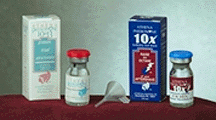
(pronounced "FAIR-uh-moans")
Pheromone definition:
Pheromones are naturally occurring odorless substances the fertile body excretes externally, conveying an airborne signal that provides information to, and triggers responses from, the opposite sex of the same species.
In 1986 Dr. Winnifred Cutler , founder of Athena Institute for Women's Wellness, and her colleagues conducted the first controlled scientific studies to document the existence of pheromones in humans. Prior to their landmark research, there were no conclusive indications that pheromones were excreted by humans.
In animals, it had been known that pheromones served to promote behavior that perpetuated the species.
By 2005, the scientific literature recognized four classes of pheromones:
- Human sex-attractant pheromones (Dr. Cutler's expertise)
- Mother-infant recognition pheromones - a signal that identifies which mother to suckle from, or which offspring to allow to remain in the nest.
- Menstrual synchrony pheromones in women - causing women in close proximity to cycle together, menstruating at the same time of the month.
- Territorial marking animal pheromones - a keep away from 'my females' signal

Athena Pheromone fragrance additives increase sexual attractiveness as proven by three published double-blind, placebo-controlled efficacy studies (two of them by independent researchers). Rigorous studies of this caliber are the gold standard of science, especially when they pass review by scientific peers and are accepted for publication.
With the sales of the products over the years, Athena Institute began funding women's health research for independent scholars, internships, offering a guide for premed students on applying to medical school, and launching a hospice premed volunteer program.
Please visit these links for further details:
*Proven: human pheromones exist and can influence relations between women and men
* Read: what real customers (names changed for privacy) have been saying about Athena Pheromones since 1993
* Read: more about the Scientific Method of double-blind, placebo-controlled research
From The Washington Post; Page 1, November 18, 1986
PHEROMONES DISCOVERED IN HUMANS -
'Scientists in Philadelphia have established for the first time that the human body produces pheromones, special aromatic chemical compounds discharged by one individual that affect the sexual physiology of another. Although animals have long been known to secrete pheromones, which typically function as sex attractants, and although the existence of such chemicals in humans has long been speculated, the new research is the first to establish their existence in humans. '
*********
From: Is He the Right Man for You?
-Sondra Forsyth, Cosmo Guide paperback 1996, p.13
More Media covering Dr. Cutler's Pheromone Discovery